
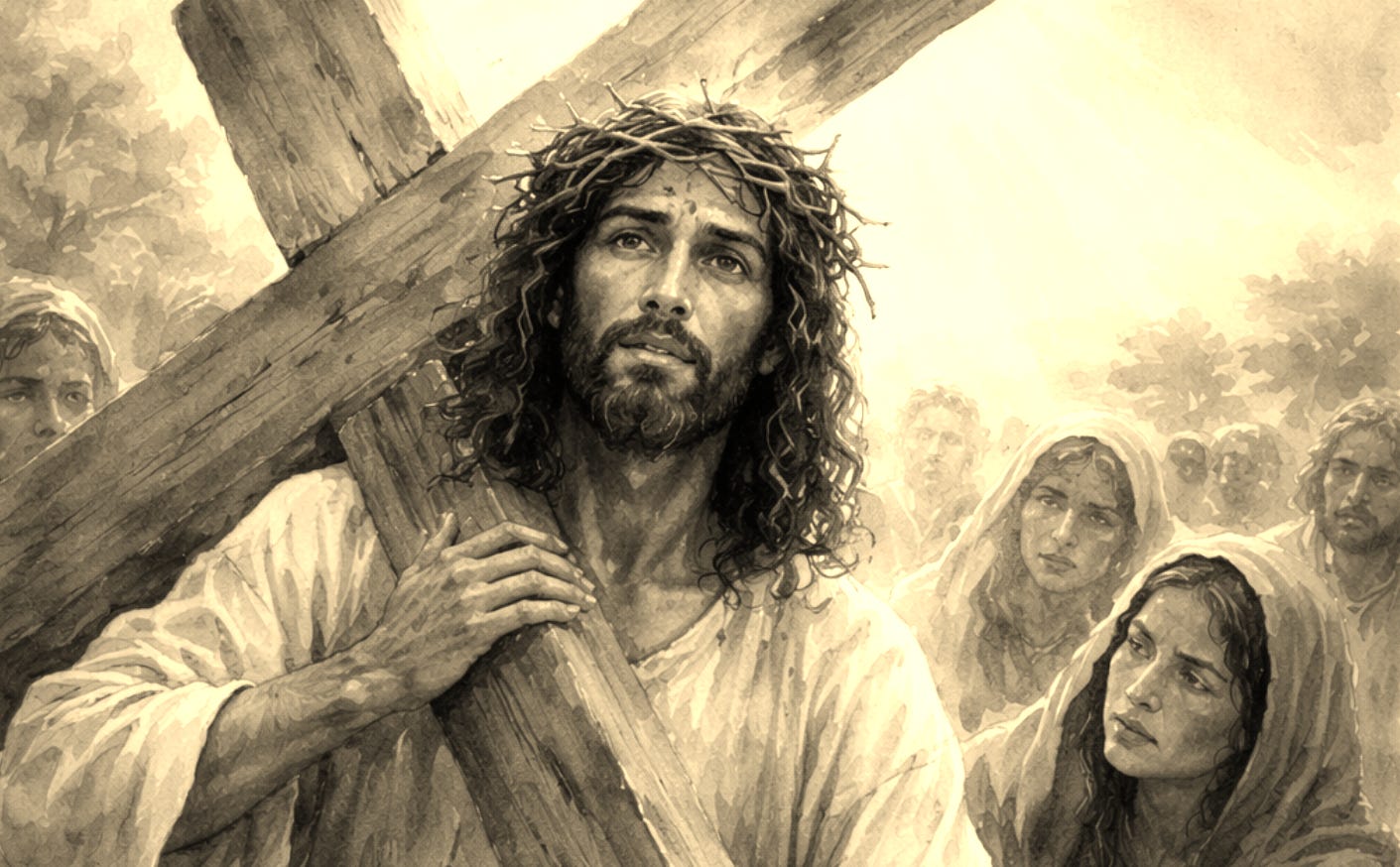
Why do we gather at the ‘foot of the Cross’ on a Good Friday? What should be our orientation as we prepare ourselves to meditate on the Cross and the seven words from the Cross?
In Kerala, Good Friday is often referred to as Dhukkha Velliazhcha (The Sorrowful Friday). This is indeed a misnomer. It is Good Friday as it is the suffering and crucifixion of Christ that brought us salvation and opened to us the possibility for a new life and the fullness of life.
Black clothes and vestments have no place as we are here not to mourn the death of Christ; but rather to celebrate the end of a life that was lived in such courage and love.
Jesus does not want our sympathy. Sympathy can be a cheap emotion where one identifies with the hero of the day for a moment, feels pity for them and is moved to tears. We often enjoy a good lamentation. That surely has a cathartic effect and gives one self-satisfaction. But the situation that brings suffering continues to have sway over our lives. Self-flagellation and self-imposed suffering would only have the effect of a narcissistic massaging of oneself.
Hence, Jesus turned to the large crowd of people that followed him and the women who mourned and wailed, and told them: “Daughters of Jerusalem, do not weep for me; weep for yourselves and for your children. For the time will come when you will say, ‘Blessed are the childless women, the wombs that never bore and the breasts that never nursed.’” (Luke 24:27-29). At the foot of the Cross, are we willing to weep for ourselves and our children?
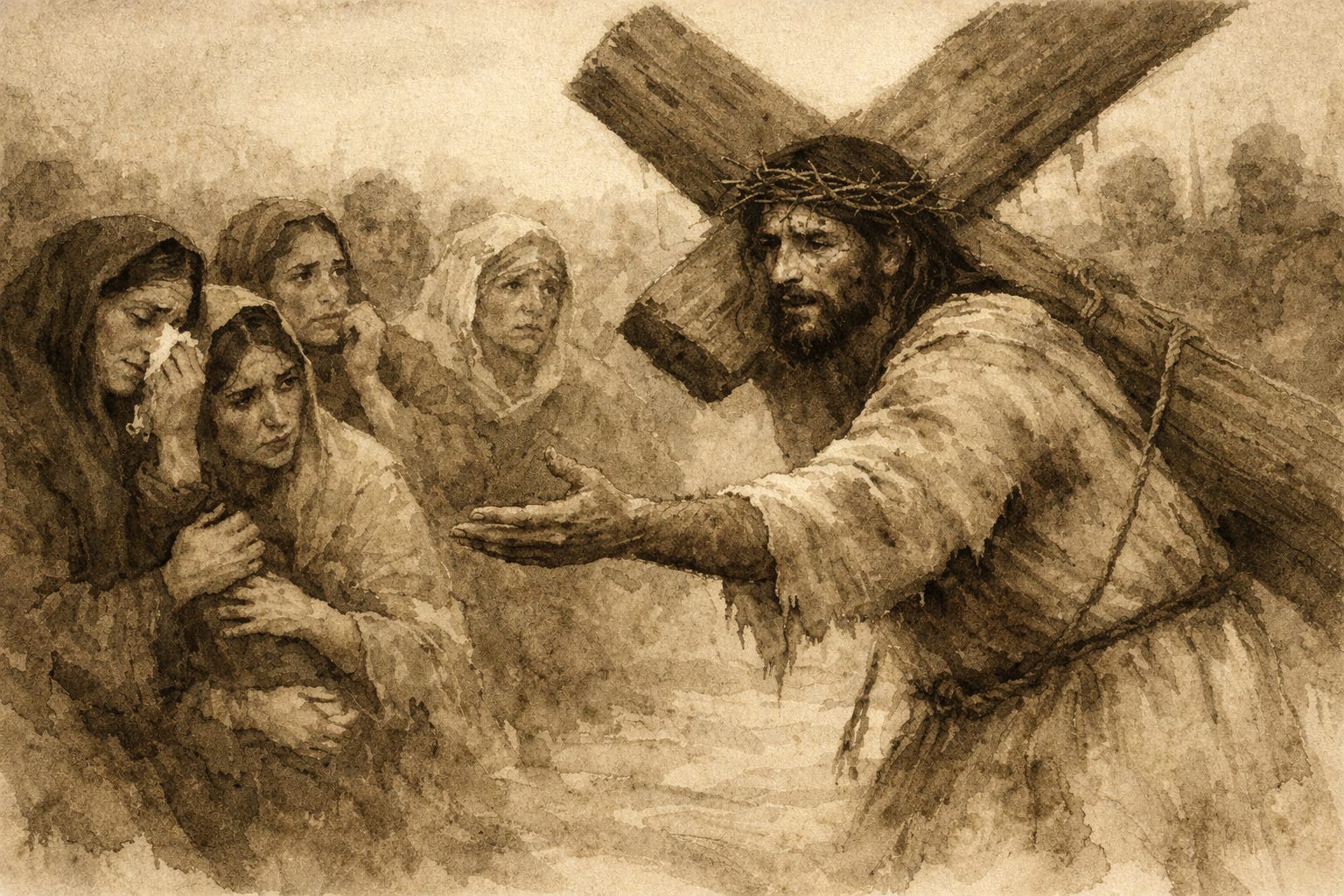
The death of Jesus on the Cross was not an accident that we should condole or sympathise with for his suffering or misfortune. It was the completion and fulfilment of a mission that he voluntarily took upon himself; it was the inevitable culmination of a life lived in obedience to God.
A narrow focus on the Cross and the end of Christ’s life without recognising the whole span of his life and ministry that was lived in solidarity with God’s mission and those who were poor, oppressed and excluded, would only result in an exercise that is futile. Jesus gave his life and no one took it from him: “The reason my Father loves me is that I lay down my life; only to take it up again. No one takes it from me, but I lay it down of my own accord. I have authority to lay it down and authority to take it up again.” (John 10:17-18). Are we ready to commit our lives to follow him?
Are we meant to be spectators of the Cross? Many followed Jesus from a distance: “Peter followed at a distance.” (Luke 22:54). Many wanted to see the crucifixion; many pitied the plight of this young man who held a lot of promise; many wondered whether he would make a big come-back; many felt angry at the way the political and religious authorities treated him, and yet they did not have the courage to stand up and be counted.
Many who extolled him as the Son of David on his triumphal entry into Jerusalem had become so disappointed with him that they turned against him. They called him a deceiver and demanded that he be crucified. Are we among those who followed Jesus from a distance? Are we prepared to be implicated in the crucifixion of Christ? We were all there and are responsible for the Crucifixion.
It is easier for us to point fingers at Judas, the chief priests, Pilate, the Jews in general, the Roman soldiers and so on. The meditation of the Cross would be meaningful only in so far as we acknowledge our responsibility for the Cross. We should realise that the same forces and attitudes that crucified the Son of Man are active in our world and in our minds, and they continue to crucify the sons and daughters of men and women.
The African-American Spiritual, “Were you there when they crucified my Lord?”, sung from the depths of black slave experience, epitomises this concern:
Were you there when they crucified my Lord? Were you there when they crucified my Lord? O Sometimes it causes me to tremble! tremble! tremble! Were you there when they crucified my Lord?
(Old Plantation Hymns, 1899)
Let Good Friday be an occasion for us to repent, turn around, like Peter: “And he went outside and wept bitterly.” (Matthew 26:75). Let us acknowledge our complicity in the Cross of Christ. Let us commit ourselves to take up our cross and follow him.
~ Prayer ~
O God, who became poor that we may become rich and who took our human form that we may partake of your divinity. Help us to realise at the foot of the cross of your Son, what our sin had done to humans and all creation; in the mangled body of Christ on the cross, help us to see the horrendous reality of our sin.
But we thank you that you have not left us without reprieve; you took responsibility for our sins and pardoned us whilst we were yet sinners. You surely took our pain and bore our suffering; by your wounds, we are healed.
Realising our complicity for the Cross of our Lord Jesus Christ, help us identify the dehumanising and death-dealing forces, within and without, that destroy humanity and the integrity of creation. Help us in repentance, solidarity and unrelenting fight, ever relying on your grace, commit ourselves to your transforming love.
In Jesus’ name we pray.
Amen.
Seven Words From The Cross
The seven words that Jesus uttered on the Cross reflect his solidarity with the broken creation, the depth and nature of suffering he endured, and the victory he had won over the powers and principalities of this world, thereby fulfilling the mission that his Father had entrusted to him. The meditations that follow in this section on the Passion focus on each of these words.
The first three words from the Cross were spoken before the darkness about which we read in Luke 23:44-46: “It was now about noon, and darkness came over the whole land until three in the afternoon, for the sun stopped shining. And the curtain of the temple was torn in two.” All the three synoptic gospels refer to this darkness. The first three words were spoken in solidarity and concern for others: his adversaries, one of the criminals who was crucified with him, his mother and his much loved disciple. It is a time when a crucified person would be extremely self-centred and self-preoccupied. It is a time of extreme physical and mental agony coupled with intense hostility to one’s tormentors. Naturally, the crucified would be cursing and spitting at those around him. But here, we find Christ being concerned about others, even his persecutors. The three words are:
1. “Father, forgive them, for they do not know what they are doing.” (Luke 23:34)
2. “Truly I tell you, today you will be with me in paradise.” (Luke 23:43)
3. “Woman, here is your son,” and to the disciple, “Here is your mother.” (John 19:27)
The fourth and the fifth words were spoken during the darkness. They were spoken from the abyss of god-forsakenness and total annihilation. Jesus enters into the depth of his mental and physical agony.
4. “Eli, Eli, lema sabachthani?” (“My God, my God, why have you forsaken me?”) (Matthew 27:46; Mark 15:34)
5. “I am thirsty.” (John 19:28)
The last two words were uttered in solidarity with His Father’s Business and they were uttered after the darkness. They were words that come from a sense of accomplishment and self-fulfilment.
6. “It is finished.” (John 19:30)
7. “Father, into your hands I commit my spirit.” (Luke 23:46)