
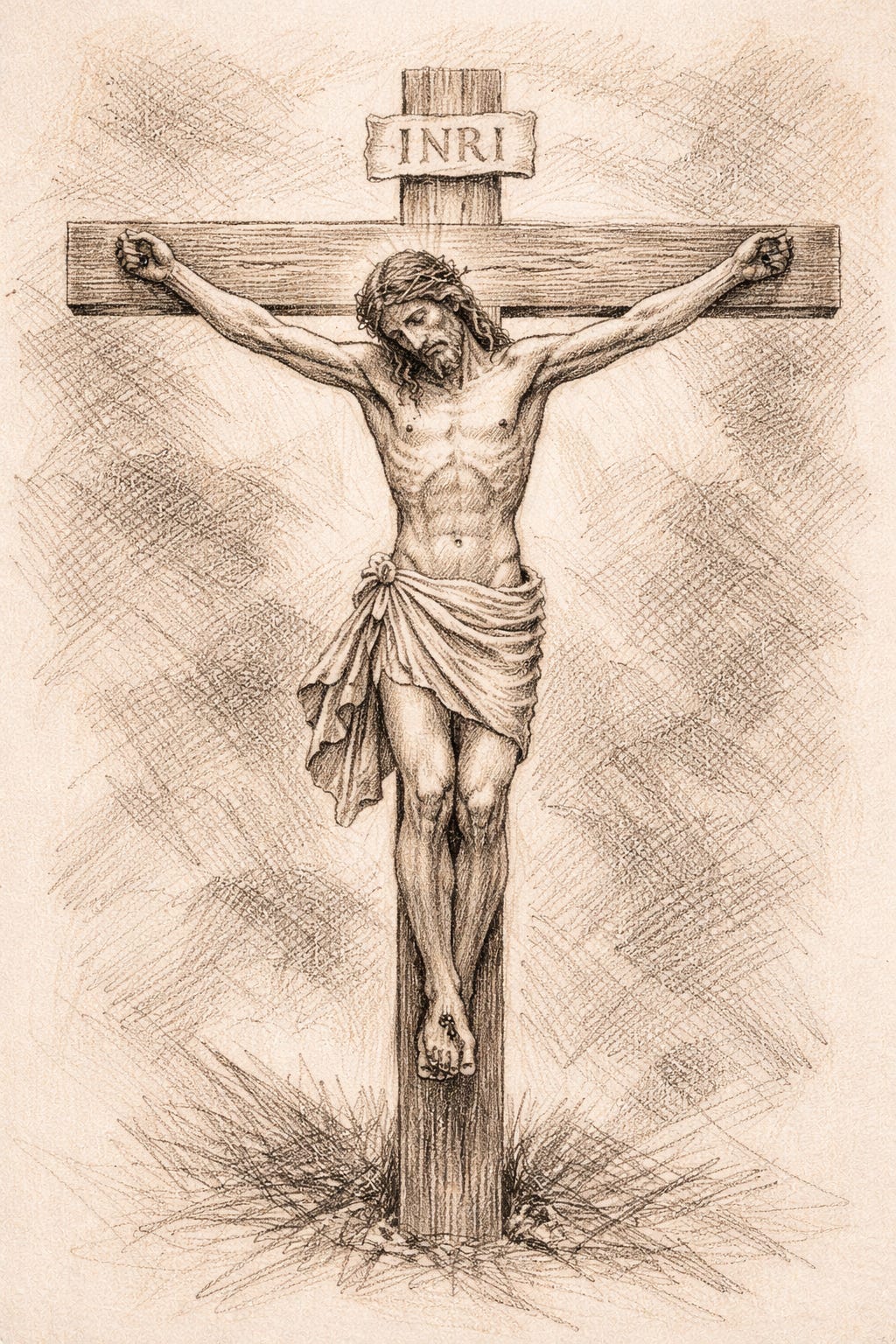
I am not a competent theologian to understand or counter the various nuances of the different theories of atonement. But I take the stance that affirms the pathos of God.
Pathos is borne out of God’s solidarity with the brokenness of the created world, wherein moved by love, God takes responsibility for human sinfulness and the suffering thereof.
If God is love, it is acknowledged a priori that true love in this sinful world can only be suffering love.
The Cross of Jesus Christ has abolished the old covenant and the old religion, with its rituals and sacrifices, and established in its place a way of doing God’s will in history; it is the way of love that seeks after the lost, the unloved; where one is willing to die so that the other may have life. It is a call for holy worldliness, demanding responsible action.
At the foot of the cross, we must acknowledge the historical reality of the cross. History is the realm of human decision and responsibility.
God did not create human beings as robots, but as those with free will. God’s love is one that respects the right of human beings to choose.
Given this, as human beings bring bondages and suffering on themselves and the created world, as further crosses are erected, God can only watch and suffer with the creation—He came to that which was his own, but his own did not receive him (Jn 1. 1).
This is articulated in the story of the prodigal son: God suffering for his creation and wishing their return—the hound of heaven.
God’s destiny is inextricably linked to that of ours; God does not wish to have another destiny. On the Cross of Christ, the human history and the divine history coalesce; it becomes one—the trinitarian history of God’s love (Barth & Moltmann).
It challenges us to a ‘holy worldliness’ and a secular living out of our witness.
The cross is not a play crafted and directed by God on the stage of history in order to placate an angry God.
The very same forces that accused him of rabble-rousing, attempting to destroy the temple, blasphemy, sedition etc. and crucified him are still active in the world, crucifying sons and daughters of God.
Jesus does not want our sympathy; he willingly took upon himself the responsibility to confront the forces of evil and redeem the world.
Who Crucified Jesus? What was behind their determination to eliminate Jesus? History is the arena of conflicting forces and human decisions. It is in the same history that God has come to “pitch God’s tent” with us. He has inextricably linked his destiny with that of his creation.
One of the leading inspirations for these meditations is what Bonhoeffer wrote in his Letters and Papers from Prison: “There isn’t any such way, at any rate not at the cost of deliberately abandoning our intellectual maturity…. God is teaching us that we must live as humans who can get along very well without God. The God who is with us is the God who forsakes us. The God who makes us live in this world without using God as a working hypothesis is the God before whom we are standing.
“Before God and with God we live without God. God allows Himself to be edged out of the world and on to the cross. God is weak and powerless in the world, and that is exactly the way, the only way, in which God can be with us and help us. Matthew 8:17 (he took up our infirmities, and bore the burden of our sins) makes it crystal clear that it is not by his omnipotence that Christ helps us, but by his weakness and suffering.”
While a sizeable portion of this compilation engages with the period of lent, culminating in Good Friday and Easter, four meditations on post-resurrection have also been included.
It is important to remember that the resurrection of Christ is not an abrogation of the Cross, but a validation of the Cross.
It reiterates that the Cross is the only answer to the riddles of history and that there are no shortcuts.
The risen Christ is the crucified one; it is only with the marks of crucifixion that we can become credible witnesses to the power of resurrection and Christ’s redeeming love.
It is only with these wounds that we can identify the risen Christ and also his body, the Church; it is only with these marks that the church can offer Benediction of Peace to a broken and suffering world.
It cautions us from empty triumphalism, but urges us to take our own crosses and follow Christ.