
The empty tomb did not give the disciples any hope; it only left them despondent and dejected. All the gospels attest to this fact. Mark’s gospel is more explicit and forthright in expressing this reality: “Trembling and bewildered, the women went out and fled from the tomb. They said nothing to anyone, because they were afraid”.
It was the appearances of Jesus that lifted them out of their despondency and dejection. Matthew, Luke and John narrate many instances of Jesus’ appearance to the disciples; Jesus met Mary Magdalene incognito and later she recognized him (Jn 20: 11-18); he appeared to the disciples when they were “together, locked for fear of the Jews” (Jn 20: 24-29); “Jesus came and stood among them and said, “Peace be with you!” After he said this, he showed them his hands and side. The disciples were overjoyed when they saw the Lord”. (Jn 20: 19-21) As seen in the previous meditation, Jesus encountered Thomas who required a very direct experience of the crucified and risen Lord and invited him to have a very tactile experience of the wounds on the hands and the side of Jesus. (Jn 20: 24-29)
The risen Lord confronted Simon Peter, Thomas, also known as Didymus, Nathanael from Cana in Galilee, the sons of Zebedee, and two other disciples by the sea of Galilee as they returned in desperation to their original means of livelihood, fishing. (Jn 21: 1-19) Forgetting the mandate given to them by Jesus, to be ‘fishers of men’, they had returned to their original occupation of fishing; much like what our churches have become, today.
Even Paul, who was not recognized as an apostle, as per the traditions of the time, since he had never met Jesus during his life on the earth, claimed to have an appearance of the risen Jesus, therein privileging him to be an apostle of Christ too. In the letter to the Corinthians, Paul describes: “Then he appeared to James, then to all the apostles, and last of all he appeared to me also, as to one abnormally born. For I am the least of the apostles and do not even deserve to be called an apostle, because I persecuted the church of God. But by the grace of God I am what I am, and his grace to me was not without effect.” (1 Cor. 15: 7-11)
It was these appearances of Jesus that made the apostles believe in the resurrection of Jesus and transformed them into powerful and courageous witnesses of his living presence in the world. Down the centuries, it was this transformation of the timid, fearful and depressed disciples into courageous and joyful witnesses of the gospel that made the world stand up and acknowledge the reality of Jesus’ resurrection.
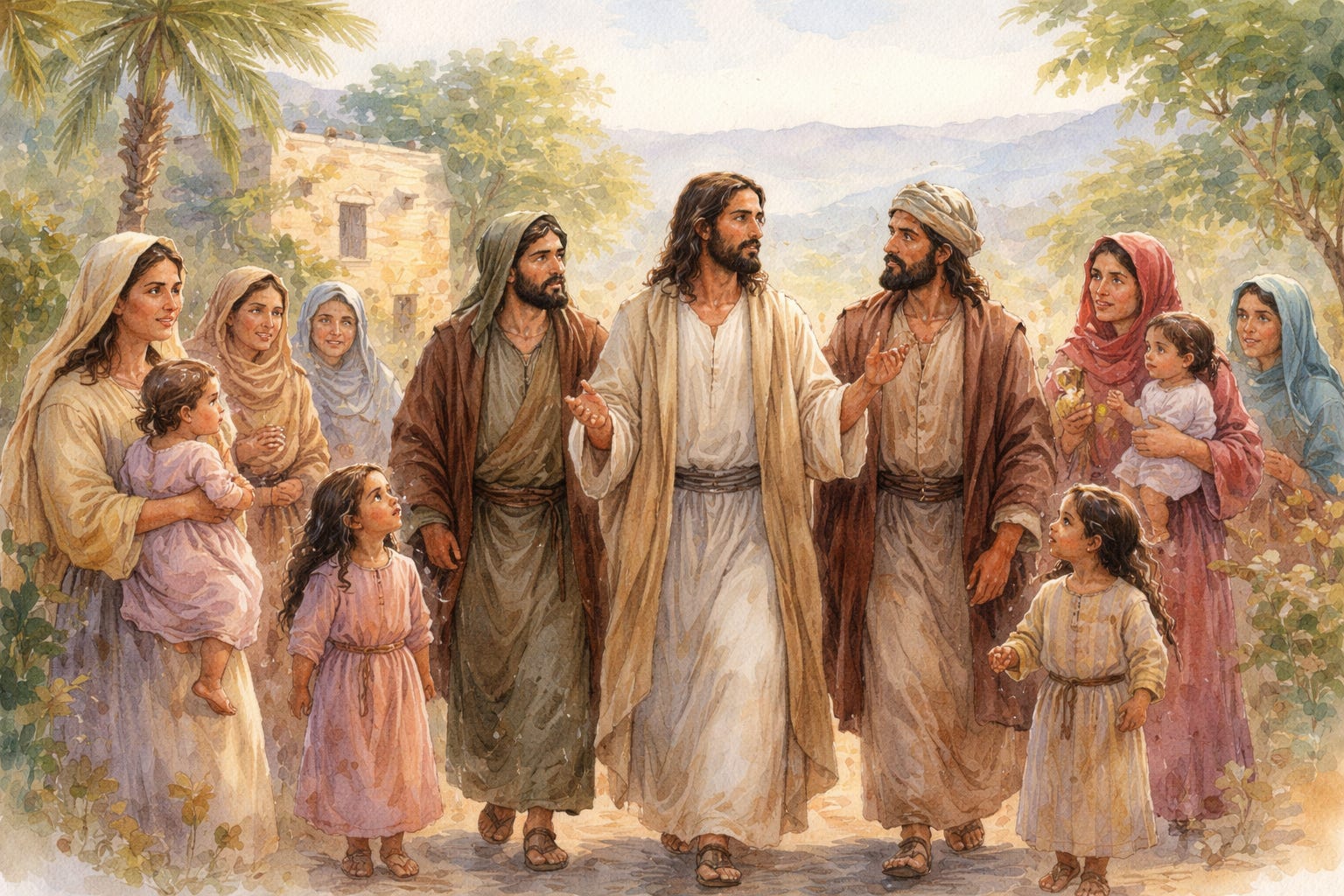
Among the many appearances of the resurrected Jesus, as found in Luke 24: 13-35 and Acts Ch. 9, this meditation reflects on two instances of Jesus appearing to the disciples: one was Jesus’ appearance to the two disciples who were on their way to Emmaus; the other was Jesus’ appearance to Saul, transforming him to Paul, many months later. The transformation that this experience brought into the lives of these disciples and in the life of Saul both, confirms the resurrection of Jesus and His living presence in our midst.
This encounter with the living and risen Jesus, who follows very closely in our walks to Emmaus, can happen only if we become blind to the world and its ways, and get a new sight or vision. In the Gospel of Luke, we are told: “As they talked and discussed these things with each other, Jesus himself came up and walked along with them; but they were kept from recognizing him.” (24: 15)
They were blind to the presence of Christ who walked with them on their long road to Emmaus. This tells us something about the nature of God’s presence in our midst.
The nature of the transformation, in the lives of the disciples, was one of re-orientation in sight or perception. They were given a radically different understanding of the crucifixion of Jesus, which for them was the tragic end to a good life and to the expectations of a people for liberation. As one of them said, “He was a prophet, powerful in word and deed before God and all the people. The chief priests and our rulers handed him over to be sentenced to death, and they crucified him; but we had hoped that he was the one who was going to redeem Israel. And what is more, it is the third day since all this took place.” (Lk 24: 19-21)
Their story was one of shattered expectations, hopes and dreams. What they had heard of the empty tomb was not at all convincing to them. They were overwhelmed by a sense of defeat; they could not appreciate the beauty and the glory of the cross.
Walking beside them, Jesus interpreted the scriptures and gave them a new sight, a new perspective on the cross: “Did not the Messiah have to suffer these things and then enter his glory?” (Lk 24: 26) He made it clear to them that the crucifixion and suffering of Jesus was not a sign of defeat but, of victory and a means to the glorification of the son of man.
We, as individual Christians and as churches are blinded by “the god of this age.” Paul writes to the Corinthians: “The god of this age has blinded the minds of unbelievers, so that they cannot see the light of the gospel of the glory of Christ, who is the image of God.” (2 Cor 4: 4)
Further, Paul points out that this glory is manifested in the cross of Christ. However, we are bewitched not to find this glory and beauty in the cross. “You foolish Galatians! Who has bewitched you? Before your very eyes Jesus Christ was clearly portrayed as crucified.” (Gal 3: 1)
Paul in conclusion to the Letter to the Galatians, states: “May I never boast except in the cross of our Lord Jesus Christ, through which the world has been crucified to me, and I to the world.” (Gal 6: 14) This is the sight we need and pray for.
We see a similar transformation in the form of a new sight regarding one’s calling and mission in the narrative on Saul’s encounter with the living Jesus. An encounter with the living Jesus blinded Saul. We read, “but when he opened his eyes he could see nothing. So they led him by the hand into Damascus. For three days he was blind, and did not eat or drink anything”. (Acts 9: 7-8)
This is followed by Ananias’ visit to him and his laying his hands on Saul: the immediate consequence was that “immediately, something like scales fell from Saul’s eyes, and he could see again. He got up and was baptized, and after taking some food, he regained his strength.” (Acts. 9: 18)
This encounter made him realize “how much he must suffer” for Christ’s name. Here again, we find a radical transformation which changes his identity from Saul to that of Paul, and a new understanding of his mission as that of suffering for Christ’s name.
“I will show him how much he must suffer for my name.” (Acts 9: 16)
On the walk to Emmaus, the disciples’ recognition of Jesus was made possible by the interpretation of the scriptures by Jesus; we read: “And beginning with Moses and all the Prophets, he explained to them what was said in all the Scriptures concerning himself.” (Lk 24: 27)
Later on, we read about what the disciples had to say in retrospect about this interpretation by Jesus: “They asked each other, were not our hearts burning within us while he talked with us on the road and opened the Scriptures to us?” (Lk 24: 32)
The role of the church today is to interpret the scriptures to the people and make the presence of the crucified and risen Christ real and contemporary in the midst of our struggles and despondency, and therein, fulfil the mission of Christ in the world. It is this task that is expected of the ordained ministers of the Church. Today we have several readings and interpretations; the fact is that most of these interpretations are made through the prism of God as power and as a source of wealth, success and prosperity.
Paul alludes to this sort of interpretation in his second letter to Timothy: “For the time will come when people will not put up with sound doctrine. Instead, to suit their own desires, they will gather around them a great number of teachers to say what their itching ears want to hear. They will turn their ears away from the truth and turn aside to myths.” (2 Tim 4: 3-4)
Instead of making a myth out of Christ’s death and resurrection, what is needed is an interpretation of the scriptures that is made within the perspective of the cross and the suffering of Christ. The whole of the scriptures points to this aspect of God as love and its realization in history on the cross of Christ. It is to suffer for the sake of Christ or the humanity represented in Him; it is to be responsible for the other - God, humanity and the creation.
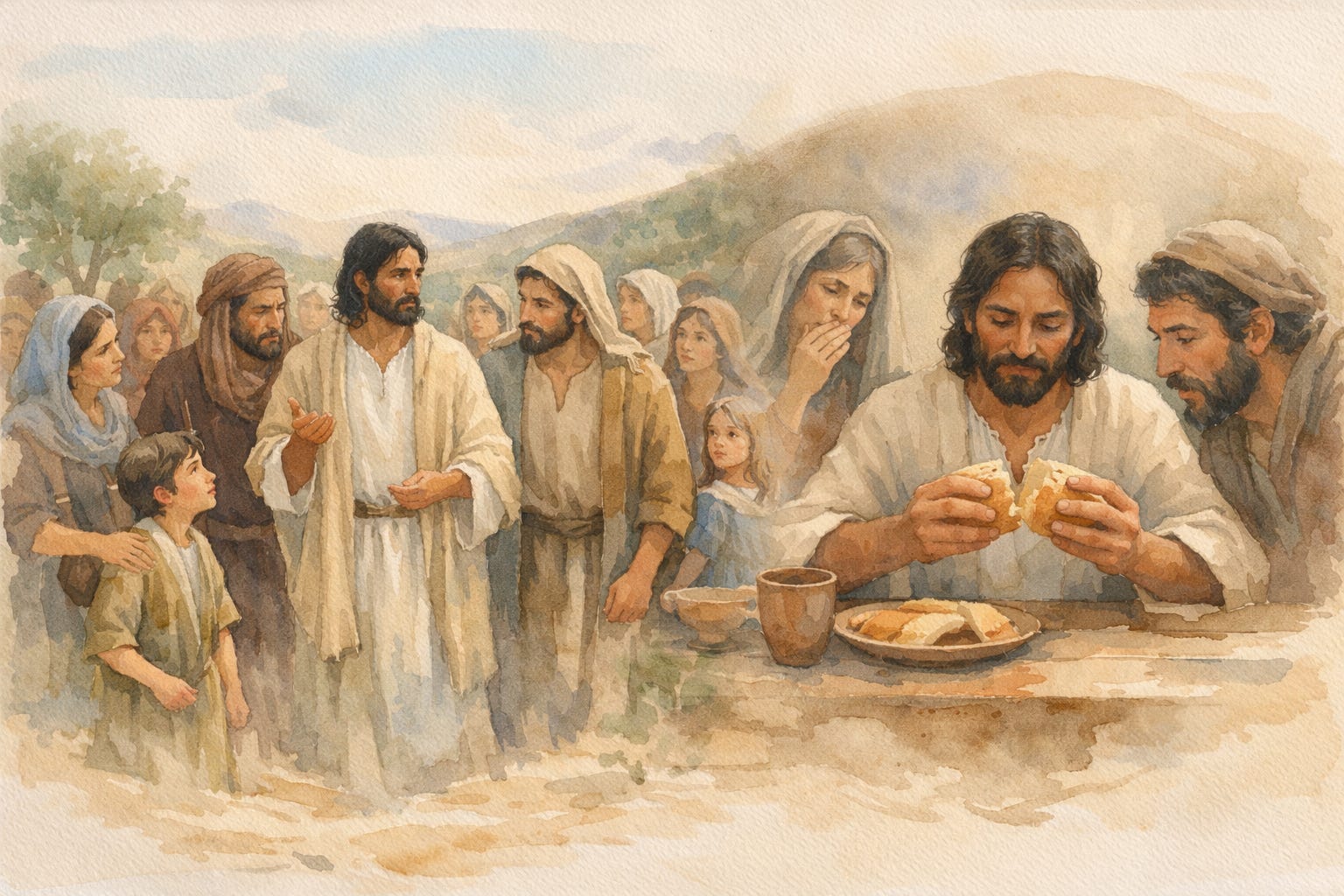
Then, we find Jesus having table fellowship with the disciples who were travelling to Emmaus. When he was at the table with them, he took bread, gave thanks, broke it and gave it to them. Then their eyes were opened and they recognized him.
It is in the intimacy of sharing, thanksgiving, and a sacrificial offering of oneself for the other, for the common good, that Jesus became recognizable. A new community is formed in the fellowship of sharing the broken body of Christ and in offering one’s body to be broken for the other. It is in this fellowship and sacrificial offering (Mass/Kurbana) that Christ becomes recognizable to the disciples.
A new community, a new ecclesia, is formed wherever we come together to “break bread”; and it is through this act that Christ becomes recognizable to us and the world.
Thus, with a new sense of mission, we are recruited into a new community that takes on the role of Christ and his suffering for a world that is badly in need of healing and wholeness. The crucified and risen Christ continues his mission of liberation in and through the cruciform existence of this community.
However, he waits to be invited to our table fellowship; he does not storm into our life uninvited. He eagerly waits for our invitation. That is beautifully expressed in Luke Ch. 14: 28, “As they approached the village to which they were going, Jesus continued on as if he were going farther.”
God respects our free will even when we move away from Him and strive to edge him out of our life and on to the cross. Yet, He still pursues us. It is this commitment that is embodied in the cross of Christ.
In Revelations we read, “Here I am! I stand at the door and knock. If anyone hears my voice and opens the door, I will come in and eat with him, and he with me.” (3: 20) Will we open the doors of our life and those of our community?
The encounter with the crucified and risen Lord creates a new way of life, a new way of being in the world, a new community, which embodies the values of the cross with a new appreciation for its beauty and power. This reorganized perception and new sight is a gift from God. It is this that we should seek and ask for: a new sight that helps us to see the beauty in the cross of Christ.
~ Prayer ~
O God, we pray that you give us a new appreciation of the beauty in the Cross of Christ that would change all our valuation of this world and this life. You make yourselves known to us in the Emmaus journeys of our life, in our diligent study of Your Word, and in our sharing of our life together. Abide with us, Oh Lord, as our guest and also our host so that the beauty of our table fellowship may make our world a little more like Your Kingdom. We ask this in the name of our Lord, Jesus Christ.
Amen.