
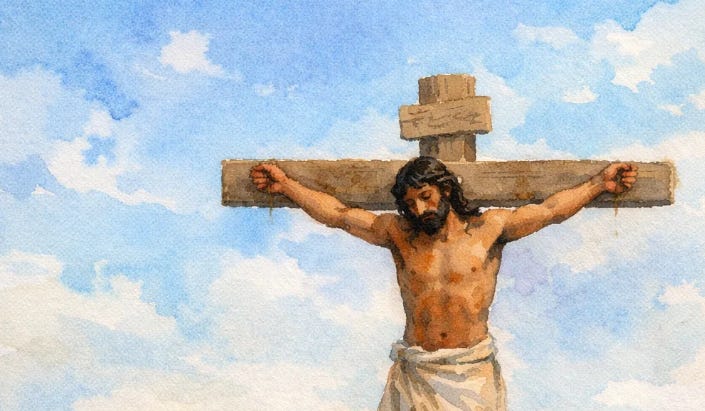
During the passion week, particularly on Good Friday, churches have conceived different ways of meditating on the Cross. Jesus’ last words from the Cross, also known in the church tradition as “Seven words from the Cross”, have been used widely since the 16th century as a way to meditate on the Cross of Christ during the Lenten season, especially during the Holy Week and on Good Friday. Since meditating on the seven words from the cross would be a long exercise, I would like to limit myself to sharing certain perspectives on the cross.
The meditations on the seven words from the cross, as expounded by preachers, often lay preachers, without much theological training, fascinated me as a young boy and continue to fascinate me either because of their distortions or because of their erudition and transformative potential. It amuses me to listen to preachers striving hard to graphically represent the bodily suffering of Christ before their listeners and then, to encourage them to attempt self-flagellation.
In the midst of these efforts to channel people’s emotions toward the sufferings of Christ, especially his physical affliction, preacher after preacher fails to lead people to the true significance of the Cross in their Christian life. Furthermore, they often trivialize the suffering of Christ on the Cross by narrating them within the framework of the atonement theory: that it was all designed by God, or predestined by God that a paschal lamb had to be sacrificed to placate an angry God, and thereby atone for the sins of His people, sin being understood in purely personal terms as a guilt-ridden conscience. The Cross of Christ gets reduced to a drama enacted on the stage of history where characters such as Jesus, Judas, Pilate, and so on, play their parts so well as per the lines scripted for them by God.
It gets reduced to the idea that salvation of humanity is achieved merely by appeasing an angry God. In this mechanical and rather abstract understanding of the Cross of Christ, ironically, as much as Jesus, Judas also becomes necessary and significant for our salvation.
Beyond assuaging our guilt and giving rise to certain personal, pietistic and soothing responses, this sort of understanding does not lead to any meaningful action or improved ethical behaviour on the part of the people. Hence, in short, what we need is to revisit the historical reality of the Cross, to be lived out in our ordinary day-to-day lives.
1. The Cross of Christ reveals the dreadful reality of sin within us and the societal structures, and what it did to the Son of Man and what it does today to all human beings and to creation itself. It defaces and disfigures humanity and the integrity of creation. It makes sin very real and visible. What defaces and disfigures humanity and God’s beautiful creation is sin both in its individual and structural manifestations.
It would be hypocrisy to say that it is human sinfulness that crucified Jesus and yet not to look for its concrete agents and their designs, and their continuing activity in the present world. They are individuals as well as structural, and often manifest themselves in their complex influences and remain hidden and invisible. However, they have tremendous power to destroy life on this earth. They are described in the gospels as “demons” and in the epistles as “principalities, powers, and the rulers of the darkness of this world” (Eph. 6:12). The Cross of Christ is God’s direct collision with these demons and the principalities and powers. Hence, naming the demons and driving them out becomes a Christian imperative.
2. The Cross reveals the boundless and unconditional love of God that seeks after his creation, which had rebelled against him and gone astray, had gotten lost in sin and death. God is not willing to condemn His creation to perdition. God has bound himself to His creation in such a way that He does not aspire for a destiny apart from His creation.
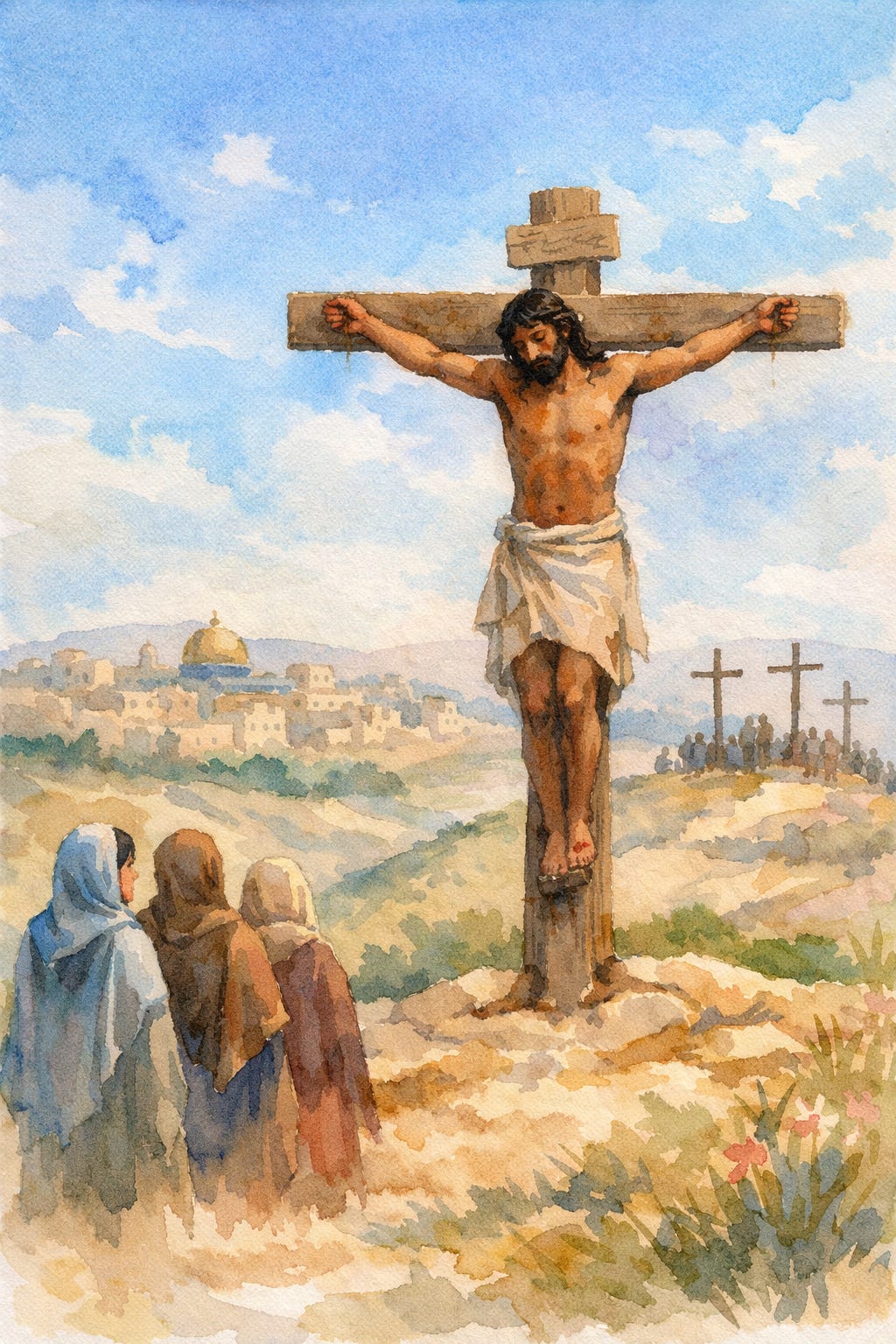
God has inextricably tied Himself to His creation that even after its deliberate choice to move away from Him, He yearns to seek after what He considers His own. God was even willing to send His Son to die for His creation. What we see on the Cross is this “hound of heaven”, as the English Poet, Francis Thompson puts it in his poem, “The Hound of Heaven”.
“As the hound follows the hare, never ceasing in its running, ever drawing nearer in the chase, with unhurrying and unperturbed pace, so does God follow the fleeing soul by His Divine grace. And though in sin…, away from God it seeks to hide itself, Divine grace follows after, unwearyingly follows ever after, till the soul feels its pressure forcing it to turn to Him alone in that never ending pursuit.” (The Neumann Press Book of Verse, 1988)
3. We find on the Cross of Christ God himself taking on the responsibility for human sinfulness and the consequent fragmentation, sickness and suffering that we see all around us. God suffers on the Cross and bears the consequences of human sinfulness. Responsibility is the catchword; God became responsible for our sins and the sins of the whole world; God saved us not by His omnipotence, but by His love.
God’s love is suffering love. True love is suffering love as it respects the freedom of the other, freedom to move away from the one who loves. What humans have done with freedom is to make a mess of life in this world; and yet, He yearns for their return, to set everything in the right relationship with Himself, among themselves and with the rest of creation.
We find on the Cross, not a detached God, but a God who suffers. This God is not the God of the philosophers, an unmoved mover, but the God who has linked His life with that of His creation so inextricably that even when they go against His wishes and create chaos and death, He can only stand aside and suffer, and yearn for their return and cajole them with His love.
Rabindranath Tagore in his famous poem, Gitanjali, exemplifies this understanding most poignantly: “Open thine eyes and see thy God is not before thee! He is there where the tiller is tilling the hard ground and where the path maker is breaking stones. He is with them in sun and in shower, and his garment is covered with dust. Put off thy holy mantle and even like him come down on the dusty soil! …Our master himself has joyfully taken upon him the bonds of creation; he is bound with us all forever.”
Jürgen Moltmann, the well-known German theologian, observed: “The fundamental Christian assertion that God is love... in principle broke the spell of the Aristotelian doctrine of God… Were God incapable of suffering... then he would also be incapable of Love.” (The Cross of Christ, p. 323) It was an echo of what Dietrich Bonhoeffer wrote from the prison to his friend, nine months before his execution: “Only the suffering God can help.” Not only does God suffer with us, but He also suffers for us. God takes responsibility for us.
4. It was the religious leadership and its vested interests that crucified Jesus. The Cross poignantly reminds us of the fact that it was religion (Jewish), the religious leadership (Chief priests, elders, doctors of law and the Pharisees) and the religious people who crucified Jesus and not the worst criminals whom we detest.
On the Cross of Christ we find the strongest criticism of religion as a system that is organized against God with its laws, rituals, sacrifices and priesthood. It is a paradox of history and civilization that in Jesus’ name we have today one of the richest and most powerful religions that exert significant influence in the world. It was the nexus between the Jewish religious leadership and the Roman state that successfully managed to control the revolutionary imagination of people and create the cultural condition for the Roman political hegemony to continue.
It was the economic exploitation of the Jewish masses that was at the backdrop of their mutual support. It is the same nexus, of the rich, the priesthood, and the politician, that still prevails in its various manifestations such as communalism/sectarianism, religious nationalism and religious fundamentalism that continue to play havoc with the lives of people and spread death all around us.
They are judged and condemned on the Cross of Christ. Christianity and the societal structures in which we respectfully participate are stripped naked and shown in their stark forms before the Cross as being responsible for the Cross of Christ.
5. The Cross is the inevitable culmination of a life lived in obedience to God’s will and against the designs of Satan. It is not a drama or fulfilment of a design that God had planned and Jesus executed with perfect precision just so that God could absolve humanity of its sins. The Cross is a historical reality. In the conflicts of history, Jesus remained in solidarity with those who were poor, the most vulnerable whom the religious leadership detested, and confronted the forces that dominated and exploited people. Jesus befriended women and affirmed their touch; he became a “friend of publicans and sinners”; he turned their religious and political world upside down. Roman state had a grouse against Jesus for destroying the pax romana, the peace of Rome that would be conducive for their political hegemony and economic exploitation in connivance with the Jewish religious elites.
Jesus confronted the forces of Jewish nationalism and proclaimed unambiguously that those pagans whom they detested would have privileged places in the Kingdom of God.
Jesus strived to usher in a new world order, the Kingdom of God, that those in political and religious authority felt would undermine their world and its schema (form or order). It was this concrete decision to go outside the camp and suffer abuse with those who are excluded that necessitated the crucifixion; otherwise Jesus could have had a death befitting an old rabbi. These same forces - forces of religious bigotry, religious nationalism, colonialism, patriarchy, casteism and economic and political hegemony - these same forces are still active in the world and continue to crucify the sons and daughters of human beings.
The Cross demands that we strive to identify and directly confront these forces which dehumanize people, destroy the integrity of creation and spread death all around. These forces remain embedded in our societal structures; they not only destroy human lives but also threaten the very existence of this planet.
As we approach the Cross, it is imperative that we affirm its historical reality and its re-presentations and re-creations in our history and everyday life. The Cross of Christ should not be turned into an object of worship. Nor should it be turned into a theory of atonement as to how we can appease an angry God.
It should find its representation in our lives. As Jesus himself commanded us, we should carry our own crosses and follow Jesus; we must commit ourselves to a cruciform existence. It would necessarily imply a life in solidarity with the mission of Christ and also the oppressed, and in confrontation with the death-dealing forces of this world.
George Macleod exemplified this perspective: “I simply argue that the cross should be raised at the centre of the marketplace as well as on the steeple of the church. I am recovering the claim that Jesus was not crucified in a cathedral between two candles, but on a cross between two thieves, on the town’s garbage heap, at a crossroad so cosmopolitan that they had to write His title in Hebrew and Latin and Greek… at the kind of place where cynics talk smut, and thieves curse, and soldiers gamble. Because that is where He died, and that is what He died for, and that is what He died about. That is where churchmen ought to be and what churchmen ought to be about.” (Only One Way Left, The Iona Community: 1956, p. 38).
Bonhoeffer shared the same perspective when he wrote: “To be a Christian does not mean to be religious in a particular way, to make something of oneself (a sinner, a penitent, or a saint) on the basis of some method or other, but to be a man—not a type of man, but the man that Christ creates in us. It is not the religious act that makes the Christian, but participation in the sufferings of God in the secular life.” (Letters and Papers from Prison, P.361)
He further states, “I discovered later, and I’m still discovering right up to this moment, that it is only by living completely in this world that one learns to have faith. …By this-worldliness I mean living unreservedly in Life’s duties, problems, successes and failures, experiences and perplexities. In so doing, we completely throw ourselves into the arms of God, taking seriously, not our own sufferings, but those of God in the world - watching with Christ in Gethsemane. That I think is faith.” (LPP, p. 369)
~ Prayer ~
O God, We recognise on the cross of your Son, the horrendous reality of our sin and what it had done to the Son of Man. We also realize your boundless and unconditional love that seeks after a wretch like me. On the cross of your Son, you are in our suffering and that you have bound yourself to our destiny.
Help us to realise that it is not the worst criminals that we detest that crucified the Lord of Life, but it is the respectable sins in all of us, especially entrenched in our societal structures. Help us to acknowledge in the mangled body that is hanging on the cross, the Lord of our life and submit to His Lordship. We ask these in the name of Our Lord, Jesus Christ, who reigns with You and the Holy Spirit.
Amen.